Wednesday, 6 February 2019

Wildlife in Miniature


Written by Kirk Mason 

Kirk is currently studying the FdSc in Wildlife Education & Media (WEM) at Cornwall College Newquay. 

Kirk uses his love of photography, combined with a fascination with arthropods and the tiny environments they occupy, to create stunning other-worldly macro images of the natural world.  

In this blog post, Kirk details his motivations in capturing the beautiful intricacies and diversity of this miniature view.
____________________________________________________                                                                              
Repeating units of maroon coloured hexagons stacked together take the form of a quadrant- it is connected to a large leathery barrel like chassis. Its texture like cracked leather, is covered in dimples and quill-like hairs of varying lengths that support sporadically placed tiny yellow orbs.
Shimmering transparent scale-like structures rest upon the chassis, reflecting light and revealing prismatic colours that are fragmented by a dark lightning pattern giving resemblance to an organic stained-glass window.


Underneath the structure, several gangly, stilt-like appendages provide support. Microscopic hooks and hundreds of barbed fibres sit at the end of each stilt providing a firm foothold to all but the smoothest of surfaces.

These features belong to a fly, a creature most often chased around the house by would be amateur pest controllers! 

The details of these incredible creatures often go unseen, due to the limitations of the human eye and our negative view of most invertebrates.


Through macro photography, we can surpass the limitations of the human perspective and observe details of these tiny creatures that would otherwise be impossible to – transforming seemingly mundane things into points of intrigue and appreciation.


So why is this important?

There is an issue with public perception of invertebrates, many people are frightened of them or see them as annoying pests. They are in fact one of the most influential groups of animals, many providing incredible utility in pollination, decomposition and pest control. We also benefit from the remarkable substances that they produce to create valuable medicines and materials.

Through influencing public opinion and cultivating appreciation, we may be able to create a sustainable future for generations to come.


This year I’m starting production on my own invertebrate video series with the aim of changing public perception of invertebrates and the habitats they occupy.

I believe that interpreting and communicating science is more important than ever due to current global events. WEM is an excellent degree with assignments that feel relevant and interesting and I intend to utilise the theories the course has taught me in my work, with the goal of inciting behavioural change.

__________________________________________________________________
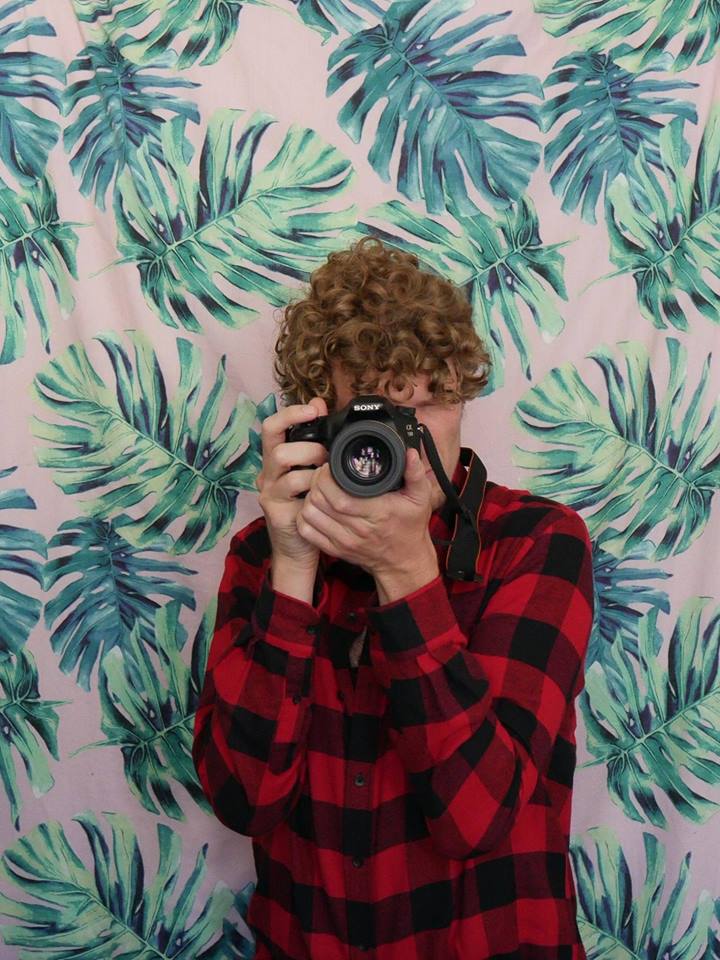
Find out more about Kirk Mason and his macro photography online at:

 Website 
 Instagram
 Facebook 
                                                                                   

Wednesday, 16 January 2019

The strengths of ‘research embedded’ teaching


 The continuing publication of student-led scientific research has been highlighted as a unique strength of Newquay’s specialist science college.

Cornwall College Newquay offers higher education programmes in Wildlife Education, Animal Behaviour & Management and Zoological, Marine & Ecological Conservation.

Despite having a smaller overall student body when compared to the majority of university providers in the UK offering comparable courses, Cornwall College has managed to retain a disproportionately high number of examples of its students having their research published in both science and trade journals.


Dr Mark Nason, who is the Head of Campus at Cornwall College Newquay, sees the ability to engage higher education students in applied research as a “key strength” of the College and one that is “almost unique within the sector”.

Mark said: “It’s extremely unusual for a college to be able to provide students with this opportunity, particularly since we are not able to access much of the money used by universities to fund their research activities. Our academic staff embed learners in their research activities wherever possible and for a College we have an unrivalled track record of supporting our learners to publish their own original research, often in collaboration with industry.”

“This helps to enrich the experience for our learners and gives them a significant head start when applying for jobs or progressing to postgraduate qualifications. Many traditional universities are envious of our innovative ‘research-embedded’ approach to teaching, which is only possible with our small group sizes. We are justifiably proud that we have managed to maintain this unique activity and that through their research, our students and staff continue to influence local, national and global policy and practice” Mark continued.

Recent examples of submitted and published research work by Cornwall College students have appeared in many leading international, peer-reviewed journals within the disciplines of biological and conservation science. These include journals Bioscience Horizons, Biological Conservation, Wildlife Rehabilitation, Zoo Biology, Anthrozoƶs, Ocean Science and trade journal Practical Fishkeeping.

Cornwall College Newquay alumni Rhiann Mitchell-Holland is the latest student to gain recognition of her work in published form. Research completed by Rhiann as part of her Honours Project for her degree forms the basis of a paper that has been recently accepted by the journal Bioscience Horizons (The International Journal of Student Research).

Rhiann said: “Publication of my Honours project in a peer-reviewed academic journal sets the seal on the quality of the Cornwall College Newquay experience for me. It was hugely motivating to be doing a project and know that the results would be used by scientists and regulators - and I knew this because they told me so, in emails and in person. When I presented the results in a poster at the South West Invasive Species Forum, it was brilliant to be treated by those taking part as one of the expert delegates.”

Rhiann continued: “It couldn't have been done without the support and guidance of my lecturers as co-authors; from dealing with the demands of referees to going through the proofs with a fine tooth comb. I know that this staff expertise isn't usually found outside of research-led universities and few universities have contacts who can apply the results. The combination of the two at Cornwall College Newquay is part of what makes it so special - and why I am so pleased to have attended there.”

For more information on the range of Wildlife Education, Animal Behaviour & Management and Zoological, Marine & Ecological Conservation courses available at Cornwall College Newquay visit www.cornwall.ac.uk or call 0330 123 2523.

Wednesday, 9 January 2019

"Be the change my generation wasn’t"

Written by Jason Birt

Jason is the Programme Manager of FdSc Wildlife Education & Media at Cornwall College Newquay. 

In this blog post, Jason imagines writing a New Year thank you letter to his future great-grandchildren in a post climate-change Cornwall.   
_________________________________________


Dear my wonderful great-grandchildren,

Many thanks for the flip-flops you gave me for Christmas – they really have made some advances with plant leather. I shall look forward to wearing them on the new beach. I hope you have had great Christmas in the Shetlands. I remember when they were a really cold outpost of Scotland. I understand they are quite temperate now and they’ve made a real success of independence.

Well, that was a fantastic Christmas we’ve just had!  I took the monorail over to New Newquay to join the many who jumped into the water at New Fistral on Christmas Day morning– not that cold: a balmy 17 °C in the water. Everybody has really taken to swimming over what was the golf course. Got to watch out for the swarms of jellyfish. Most of the time they are just annoying but occasionally they are the really poisonous ones.

Back at my house on the south coast, the turkey was washed down with some cracking Pinot Grigio from a lovely vineyard in Cumbria. They don’t half know how to ring out those flavours in the Lake District. Not a patch on the wines we had in the 2010s but French and Italian wines are a thing of the past. We had the dinner out in the garden during the evening – a bit too hot inside the house still and the garden during the day was burning hot. I must admit it does seem all of a palaver to slap on the 100% DEET before heading out to pull some crackers but those midges, sandflies and mosquitos are the devil himself. Got to take precautions, though, what with your nephew contracting malaria when visiting the Cambridgeshire coastline last November and I still get relapses from when I got it on a trip to Wales 20 years ago.


Do you remember all those years ago when I bought that cheap inland property?

I said it was a future investment because it would be waterfront in a few decades. You all laughed, thinking I was joking. The climatologists and oceanographers only predicted a 1 metre rise by 2100 back in 2018 but even they couldn't have guessed just how quickly the Greenland and Antarctic ice-sheets would slip off the land.Who’s laughing now? Nobody. Nobody at all.

As I mentioned, we had Christmas dinner in the garden. It was such a treat to hear those small autumnal waves lapping on the new beach just the other side of our garden fence. We went for a snorkel before dinner and it’s amazing just how quickly what was once farmland is turning into a marine habitat. It’s always a pleasure to see triggerfish and other Mediterranean creatures taking advantage of these new habitats - it's just a shame to have lost all the marine species from my childhood, especially as the diversity of species is much lower now.

You might worry that with my garden being southwest facing and now coastal, I would be in danger of these more powerful storms we've had these past few years. I have taken measures – the fence is more of a sea wall, really. And I have had a few inundations – cost me a few Euros as I cannot get home insurance anymore – but most of the time the wind is blowing from the northeast, so my coastal retreat is quite sheltered. I reckon I’ve got another decade before my house retreats beneath the waves: the sea is rising quite quickly.


What have I missed this year?

Birdsong - we have lost almost all of our species in recent years. They say it is because the migratory birds arrive too late for the invertebrates they feed on. They have done their thing and by the time the birds arrive, they have flown off or died. Nothing to feed them after such a long flight; nothing to feed the chicks either. That’s assuming the birds have survived the intensity of heat in Africa.

In my childhood, I loved seeing the swooping flights of swallows, swifts and house martins as they pursued their quarry of insects. No more. I must show you some video – the evidence predates holographic-telepathic transfer.

I also miss the fish I grew up eating. Trigger fish isn’t the same with chips as cod and haddock. Those species are just too far north in the Arctic and the Arctic Union won’t allow us in to catch them anyway. But you guys in Shetland know that! And I don’t care what the manufacturers say – jellyfish just isn’t a suitable replacement for shellfish, no matter what they do to it. That's ocean acidification for you...

But we’ll cope, I guess. Cornwall does feel like it’s getting hotter with each passing year and my air conditioning unit struggles during the hottest days of summer. I feel sorry for those who don't have one - it's a necessity these days. They say that the European desert is encroaching north with each decade. I can’t believe that it has reached as far as southern Brittany. Well, during the summer at least. I do like the way that it blooms during the winter, when the rains come, assuming it doesn't flood.

Anyway, that’s enough for now! I will hopefully, finally get to jet up to you in New Lerwick during the year, as I've always wanted to see it. And you are always welcome to fly down to the airport in New Newquay any time you want – as I said earlier, there is a decent monorail the six miles across to the south coast.

Yours sincerely,

Your Great Grandfather

P.S. – In all seriousness, I wish I could send this letter back in time to the students I was teaching in 2019. I'd tell them, “Be the change my generation wasn’t – it’s up to your generation to do something to remedy this developing situation. If this letter fires you up with righteous indignation – and it should – take the first step of a momentous journey of change and become an expert in how to make things right.” 


Of course, it's too late now. My sunny optimism in this letter masks the fact that conditions are tough here in Cornwall. I wish that you, my great grandchildren, had my childhood of birdsong, fish in the sea and seasons involving some sort of cool temperatures. Certainly, I wish you didn't have to fend off the mosquitoes. Perhaps Shetland gives you that childhood? I do hope so!


Friday, 21 December 2018

Alumni Q & A- Brogan Pett


Brogan Pett studied both the FdSc Zoological Conservation and BSc Applied Zoology at Cornwall College Newquay before completing his MSc in Wildlife Biology in Edinburgh.


Since then, Brogan has used the knowledge he gained studying to travel the globe pursuing his passion for wildlife and conservation. 


He is now working in Paraguay as an Entomology researcher and museum curator with the organisation Fundacion Para La Tierra.  


___________________________________________________________________________

We sat down with Brogan to find out more:


  • Tell us about your time at Cornwall College?
Brogan: I chose the course because, based on the modules, it gave the most comprehensive array of topics in the zoology/ conservation sector of any other universities subject guides I had read. In general, conservation of the natural world had been the panacea of my ethos since I was about five, so it was the right choice for me. 

The location of the campus is absolutely beautiful, the small size of campus and classes meant I had very good relationships with my lecturers and tutor, being able to have a personable chat with lecturers makes a great deal for creative discussion and enables students to maximise what they gain from classes.

I learnt an awful lot reflecting on the wide range of modules that we studied, (truly, many many modules), which gave me a great feel for where I wanted to go in regards to specialisms etc. 

  • What have you been up to since finishing your course?                               

Immediately after finishing my course in Cornwall, I worked in a small village in southern Tanzania for four months on an amphibian monitoring project, followed by a short trip to the Zambezi to jump off the Victoria falls bridge (Terrifying). The following summer (2017) and this summer (2018) I did work as an entomologist for Operation Wallacea in Madagascar. 

This past summer I have been awarded grants from both the Linnean Society and Mohamed Zayed species conservation fund, to conduct an independent research project after the Opwall season with BSc students from Mahajanga University on a recently discovered and highly endangered species of Lycosidae (wolf spider) found in the region.


We will be used mixed modelling approaches to try and estimate population sizes and range estimates and see if we can get this pretty spider some international exposure to aid its conservation. 

  • What tips would you give future students that you have found useful?
Be better than yourself last week, that’s all, in whatever small ways you can push those boundaries, if you do that from the day you start a three year course, you’d have 156 weeks of growth which means you’d essentially be a human sunflower.


  • How did your course help you with your career?
The wide variety of modules and assignments really helped spur me on as a scientist in a range of different disciplines. You may wonder why you have many assignments but you’ll be thankful for them in a few years! Challenging yourself is absolutely key to development and any future success you want to have and  Cornwall College was challenging and interesting, I really cant stress enough how much having those personable relationships at the College was to my development.


  • What is the best thing about a career in conservation?
Aside from the actual job, I’d just like to say that conservation as a career path is absolutely a world opener. i.e. there is no destination you can’t go and work, truly. If you like exploring, doing something positive, and science, or even if you don’t particularly like science. Stick with conservation and the worlds your oyster! 

My actual current role as an entomologist is my dream job. Studying tropical insects / spiders etc. is just mind- blowing. The sheer diversity and range of species, colours and forms is almost too difficult to put across. But it’s something that fills you with wonder everyday.


For more information on the range of Zoology and Conservation courses available at Cornwall College Newquay visit www.cornwall.ac.uk or call 0330123 2523. 

Tuesday, 11 December 2018

Something to crow about: There’s life in the churchyard!

Written by Kayleigh Hunt 

Kayleigh is a student at Cornwall College Newquay, currently studying a BSc in Applied Zoology.      
_____________________________________________

As our world becomes more urbanised it is often the countryside which suffers, it is therefore so important that our pockets of green space are preserved. Churchyards can often be the only remaining green area within fragmented landscapes and have an important role in conserving natural habitats. Preserving churchyards may not only benefit the fauna and flora, but the public too, with it being widely accepted that nature can have positive effects on human well-being.

I have loved birds ever since I can remember, when I was little, walking round my Grandad's aviaries was time well spent! Birds are excellent environmental indicators and the range of bird species within a churchyard not only reveals information about the avian community but other communities as well. For example, where there’s insectivores, it’s likely the invertebrate community is thriving! Therefore, as part of my BSc Applied Zoology degree I decided to research how the habitat composition of churchyards in North Cornwall is affecting bird communities and what management implications this may have.


My data collection involved two visits a day for two days to each of the ten chosen churchyards. One visit at 5am (thanks to the Spring/Summer weather of 2018, the spectacular sunrises were worth the early starts!) and one at 7pm. Six points were established throughout each churchyard and the maximum number of individuals of each bird species seen at any one time was recorded. As well as this, various habitat variables were recorded, including tree cover and grassland structure.


Results revealed that the most influential habitat variable on bird diversity is grassland structure. The management of grassland varied greatly between the ten churchyards and management level could be divided into three categories. Overly managed (mown), well managed (overgrown and mown areas) and unmanaged (overgrown). The three ‘well managed’ churchyards had the highest levels of bird diversity. At one site, between two visits, the overgrown grass was decimated. Wildflowers destroyed. Any invertebrate life inhabiting the area lost. Very tellingly, just 15 bird species were observed following the cut, compared to 26 and 23 before.

During this project I met with Robert Moor – coordinator of The Cornwall Living Churchyards Project. One of the projects main objectives is to diversify the grassland structure of churchyards to increase the range of wildflowers and invertebrates. Upon this discovery, I realised how important the findings from my project could be, that the science behind it could support the efforts of Robert Moor and local groups trying to help the fauna and flora in their churchyard.

My passion for the subject has led to a group in North Cornwall – The South Petherwin Cake and Raker’s - approaching me to join their committee to transform their churchyard into a ‘Living Churchyard’. This opportunity enables me, along with other members of a small community to take a proactive approach, which along with my research, I hope can make a real difference in the future.


For more information on the range of Zoology and Conservation courses available at Cornwall College Newquay visit www.cornwall.ac.uk or call 0330123 2523. 

Tuesday, 4 December 2018

Life as a Ranger


Written by Phil Maund

Phil is a former student of Cornwall College Newquay, studying an FdSc in Applied Ecology in 2012. Last Winter he started a new job role on the Isles of Scilly, with the Wildlife Trust, working as a Ranger.    
________________________________________________

Amidst breath-taking views of rugged Atlantic coast, the cool sea air easing in from the West, we clamber over granite boulders and endless hummocks of pastel-pink thrift flowers. Despite the awesome backdrop, our gaze is firmly on the ground before us lest we trip, or worse step on one of hundreds of carefully prepared seabird nests cradling eggs or fluffy chirping chicks. It’s summer and the land around us is strewn with nests, guano and feathers; we have intruded on an avian world, the likes of which is rare in modern times. We don’t intend on staying long, not merely due to the threat of painful dive-bombing skirmishes from above, but we have a couple of days to count the nests and chicks before leaving these majestic animals in peace.


We are on Annet, in the Isles of Scilly, some 30 miles southwest off the coast of Cornwall. Annet is a small island that is a protected site for seabird breeding colonies, including Great Black-backed Gulls, Shags, Oystercatchers and others. Many of these species are not often seen breeding successfully on mainland Britain, in part due to predation by land predators (such as rats) and disturbance from humans. Fortunately, a highly successful eradication and monitoring project has removed rats from both Annet and neighbouring St. Agnes & Gugh, which has seen a marked recovery of breeding success for seabirds on these islands. Furthermore, humans are prohibited from landing on Annet year-round, to prevent harmful disturbance. We are a small number of lucky individuals with the opportunity to enter their amazing world for a very brief period, in order to survey for the health of the seabird colonies, which will inform nationwide efforts to protect these species.


I work as a Ranger for the Isles of Scilly Wildlife Trust, a small charity based on St. Mary’s, responsible for managing 64% of the land across the islands. The charity have a lease agreement with the Duchy of Cornwall to manage the full range of marine and land habitats, including working to promote and protect the amazing species that reside here. We also carry out a wide range of public activities such as guided walks and beach cleans, removing a whopping 3.5 tonnes of debris from the coastline in 2018 alone.

 My role is to work with the other rangers in managing the habitats, surveying populations of our target wildlife communities, organising our friendly herd of cattle and keeping 30 miles of footpaths open and accessible year-round. My work is incredibly varied, from surveying seabird nests to coppicing wetland trees, setting up fencing for our grazing and clearing ancient archaeological burial sites. We experience the beauty of the Isles throughout the seasons and enjoy spectacular panoramic views on nearly every day of work. 

In the summer, we see the Isles in all their glory and our work helps others to enjoy them, with tourism being central to the local economy. In the winter, conditions can certainly be testing as we are often battered by raging winds and squalls of rain but this is all part of the job for a ranger. We take the highs with the lows in the hope of helping our precious wildlife through our work. 


Having made a drastic career change from trying to become a professional musician, I began studying with Cornwall College in Newquay on an FdSc in Applied Ecology back in 2012. I graduated three years later with a full Honours degree and this enabled me to begin my career in conservation. The skills and knowledge I developed throughout my course are frequently called upon in my current job, including the surveying techniques for a full range of wildlife.

Back on Annet, we finish our seabird nest counts as quickly as we can, to avoid unnecessary disturbance to the devoted parents circling overhead and their offspring. Our work isn’t quite finished, though, as we then survey for the vocal calls of two fascinating species, the Manx Shearwater and the Storm Petrel, both of which nest in cavities under rocks and in burrows under the ground, much like their well-beloved Puffin neighbours.

All of the data we collect informs our grasp of the national and local trends of these seabird populations and there are certainly winners and losers. Worryingly, modern times are seeing an increasingly frequent abundance of losers in the fight for species survival. As we leave the islands, watching our feet as we go, every other step is punctuated by a distinct hollow crunching sound which betrays a disturbing truth. Beneath these granite boulders and endless hummocks of pastel-pink thrift flowers are strewn countless objects of various shapes and sizes, dumped by the surrounding sea and winds, nearly all formed of plastic. This truth beneath the surface of an otherwise incredible and majestic wild world underlines the importance of nature conservation in our times and for the future, making the work of Rangers vital.

For more information on the Isles of Scilly Wildlife Trust, visit ios-wildlifetrust.org.uk or find us on social media.

Tuesday, 1 May 2018

The road to Zero Waste


Since studying a degree in Applied Marine Zoology at Cornwall College Newquay, Adele Morgan has been striving to live a zero waste lifestyle. Adele decided to make changes in her own life after realising that, like the vast majority of people, she was contributing to an ongoing problem.

Adele Morgan 
Adele now takes every opportunity to make a considered choice when it comes to her own consumption and the things she purchases and uses. Adele shares her zero waste experiences on a blog called Minimal Impact Kernow, which is well worth a visit for details on how you can make small changes that collectively can have a large-scale positive impact on the environment.  

Adele is also the newest member of the Your Shore Beach Rangers team, a collaborative project between Cornwall College Newquay and Cornwall Wildlife Trust, which allows young people to learn key work and life skills, meet like-minded people, get active and make a positive impact on the marine environment.

We caught up with Adele to gain an understanding of her motivations and insights relating to a zero waste lifestyle:

Why Zero Waste?

Adele collects her monthly waste that cannot be recycled in a single jar
Adele: Zero waste is a movement and a goal to reduce the amount of trash you create. Living in Cornwall, I have witnessed first-hand how anthropogenic waste has impacted our environment. I have recorded marine life entangled in plastic and observed coastal locations covered in litter. 

Before I went zero waste I bought and chucked out so much trash and didn't even think about it. But that being said, I grew up around single use plastics and other disposables, not actually taking into account where all of our trash goes because it was the normal thing to do. I was highly addicted to buying 'stuff' just because I wanted it and most of the time, it got used for very short periods of time before breaking and ending up in landfill. 

I have always been a massive nature lover and studied a bachelors in Applied Marine Zoology so I knew all about the plastics in our oceans and how they were harming our marine and terrestrial life.  

By taking little steps in our own lives to reduce our impact we can make a massive difference. By making a change, we are creating awareness for our environment and awareness as to how much trash we create on a daily basis. 

So what's wrong with plastic?

Adele: Plastic is a synthetic material that is made to be durable, cheap and easy to produce. Because of this, plastic will never breakdown in our environment and will last hundreds and thousands of years. That means that every single item of plastic we use will remain on the Earth forever.

Instead of breaking down naturally like food waste and natural materials, plastic will simple break into smaller and smaller pieces. Plastic in our oceans is a very concerning topic. Micro plastics, identified as pieces less than 5mm are floating on the ocean surface and are ingested by smaller marine species such as plankton and fish.

Plastic is coated and made from chemicals and toxins which are hydrophobic (doesn't like water) and therefore will sit on the surface of the item and therefore also become ingested it. In addition to being hydrophobic, these chemicals are also lipophilic, so will store themselves in muscle and fat affecting the anatomy and physiology of animals such as their hormones, endocrine systems and reproduction organs. Larger mariner life such as baleen whales that eat these plankton will then accumulate these toxins and store them in their bodies. As mammals they unfortunately also gain these toxins and as a result pass these onto their young, also known as the toxic dump.

What will people get out of reading your blog? 

Adele: I use the blog to share information and shed light on the common problems we face today regarding waste and plastic pollution. I share my top tips as well as my own journey on how I'm producing less waste in my life. ​I hope people enjoy reading the blog and I hope it inspires them to reduce the amount of waste they create and possibly join the zero waste movement. 


What can people do to start their journey towards a zero waste lifestyle?

Adele: Firstly, it’s important to know that becoming zero waste doesn't happen overnight. It is impossible to be completely waste free and it may take many years for you to transition fully by slowly replacing items over time. A good place to start is my blog post offering my own beginners guide to get you started! (HERE) There are a number of easy swaps that you can make that will a big difference.   

Here is something simple to remember- In order to achieve an efficient zero waste life style, I live by the 5 R's:

Reduce - The amount of disposable products you use
Refuse - What you don't need
Reuse - What you already have
Recycle - Items you cannot reuse
Rot - Compost food scraps and natural materials

Overall, a zero waste lifestyle is a journey where you will have successes but also fails and you will learn from your mistakes every day. Despite this, the journey is self-rewarding and every change has the potential of great impact on the environment.


-You can read Adele’s blog Minimal Impact Kernow HERE

-For more information on Your Shore Beach Rangers visit HERE

-For more information on the range of Zoology, Surf and Marine courses available at Cornwall College Newquay visit www.cornwall.ac.uk or call 0330 123 2523.